

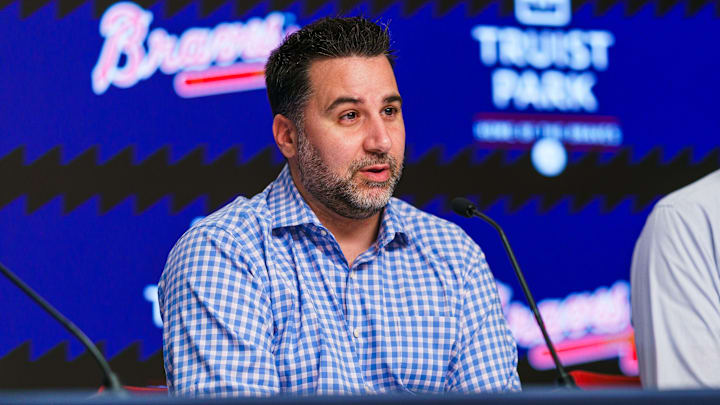
The Atlanta Braves didn’t just have a bad year; they had a familiar one. The 2025 season felt like a rerun with worse lighting, same soft spots, the same gambles on health and depth, and an even more stunned look by August. The injuries piled up and the offense stalled. For a club that still boasts one of baseball’s splashiest cores, Atlanta’s biggest failing wasn’t one catastrophic decision; it was the quiet, compounding choice to trust that star power could paper over structural cracks a second straight season.
That bet aged quickly. The front office talked continuity and confidence while the schedule demanded contingency and coverage. Instead of overcorrecting after 2024’s warning shots, the Braves tried to thread the needle again: patch the outfield on the fly, hope the veteran bats clicked back into place, and cross their fingers that a high-variance rotation would simply hold. What followed was a season-long scavenger hunt for answers, too often finding “almost” and “if healthy” where they needed certainty.
How the Braves let 2024’s warnings become 2025’s reality
Depth was the headline failure. The outfield turned into a revolving door of auditions that never stuck, an echo of the previous year’s carousel. Atlanta eventually circled back to Ronald Acuña Jr. as the one reliable pillar and leaned hard on Jurickson Profar after his suspension, but the road to that configuration was littered with underperforming fits and short-lived fixes, and even Acuña battled his own injury issues. When the music stopped, they were still a chair short.
The lineup regression hit where it hurt. Michael Harris II and Ozzie Albies were inconsistent, Marcell Ozuna sank into a slump deep enough to get benched, and Austin Riley’s second straight injury-marred campaign, one that still somehowearned him a Silver Slugger nomination, removed a middle-of-the-order counterpunch just as the pitching staff began to wobble. A talented core is the starting point, not the safety net; the Braves treated it like both.
On the mound, “unlucky” became “unprepared.” Yes, the sequence of injuries was brutal, no team expects all five Opening Day starters to find the 60-day IL. But the point of learning from 2024 was to build a margin for that very kind of storm. Atlanta instead gambled that a rotation with known red flags would stay upright over six months, and when it didn’t, there wasn’t enough support to keep the season from unraveling.
Even the contingency plan frayed before Opening Day. A key depth add, Jeff Hoffman, never materialized after a failed physical, and the bullpen, an early-season problem in 2024, once again cost them winnable games before the weather warmed. Relievers will always be volatile, but doubling down on volatility without stacking redundant options is a choice. The Braves made it twice.
None of this was unforeseeable. As ESPN’s David Schoenfield laid out, replacing the departed Max Fried and Charlie Morton meant 59 starts and nearly 340 innings vanished on Day 1. Layer in that Reynaldo López ended 2024 with arm issues, Chris Sale’s recent health history, Spencer Strider returning from a major injury, and youngsters like Spencer Schwellenbach and AJ Holmes facing first full-season workloads. Atlanta believed it had enough insulation with Bryce Elder and AJ Smith-Shawver. In retrospect, that was optimism dressed as depth.
The pattern extended to organizational priorities. The Braves banked on internal solutions and brand-name stars rediscovering peak form, rather than flooding the roster with boring-but-bankable innings and league-average bats to smooth out the valleys. When those stars wavered, there wasn’t a second wave to hold the line. That’s not necessarily bad luck, it’s more about roster philosophy.
Where does that leave them? With a clear mandate: stop chasing best-case scenarios. Take the Milwaukee Brewers blueprint and stockpile durable 140-inning starters even if they lack sizzle. Convert them to bridge arms if you have a fully healthy rotation.
Add two outfielders whose median outcome is competence, not a free-swinging lefty who can’t tell the difference between a wall-ball double and a sure-thing home run (looking at you, Mr. Kelenic).
Fortify the middle-relief lane so close games stop bleeding in the sixth. Most of all, treat “depth” as a daily habit instead of a press-conference slogan. The Braves don’t need to reinvent their identity; they just need to insulate it.
 Add us as a preferred source on Google