

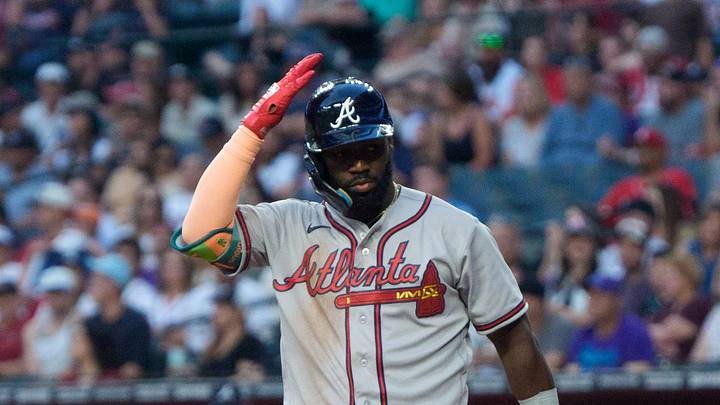
The new ABS challenge system has largely been a success around the league in 2026. Most teams understand how challenging the right pitch at the right time can flip a game. Unfortunately, Braves fans know Atlanta has struggled all season adapting to ABS. The numbers back that up as well; Braves hitters have an overturn rate of just 40%, the lowest mark in Major League Baseball.
Additionally, Braves hitters have a bottom-third challenge rate overall, meaning they are a little too hesitant to tap the helmet. Jason Foster of mlb.com detailed this excellently in his latest article, explaining how Atlanta has missed opportunities by not challenging pitches that were incorrectly called strikes.
ABS overturned in #Braves at #Phillies (Bot 7).
— ABS Auditor (@ABS_Auditor) September 5, 2026
Sean Murphy challenged the ball call on Didier Fuentes' pitch to Justin Crawford.
Ball -> Called Strike.
HP: Steven Jaschinski | Upheld 56.8% (42/74).
Later: Justin Crawford strikes out swinging. pic.twitter.com/DNBgnBoKiX
Braves hitters must know they need to fix their ABS issues before the postseason rolls around
Atlanta's zone recognition has been flawed most of the year, and one of the stats Foster points out in his article is "reasonable" challenges. A "reasonable" challenge opportunity occurs when at least one of the following is true: the original call was incorrect; the pitch is within three inches of the strike zone edge and an overturn would gain at least 0.3 runs; the pitch carries an expected challenge rate of at least 20%.
Atlanta's hesitancy is showcased in their reasonable challenge metric, ranking 25th in MLB because they had challenged just 18% of reasonable opportunities. Additionally, only 64% of their hitters' challenges met the "reasonable" criteria, ranking 23rd in baseball. Basically, the Braves weren't challenging the pitches they needed to challenge enough, and wasting too many challenges on pitches that were not deemed reasonable. This explains their poor ABS results thus far in 2026.
Hearing Austin Riley say he disliked ABS recently on Mookie Betts' podcast illustrates Atlanta's overall discomfort with this important new system. Unfortunately, this is a problem that will only get magnified once the games become more important. In Friday's game against Philadelphia, we saw how Sean Murphy's ABS prowess can benefit the pitching staff in important moments. Now, it's time for the lineup to follow suit.
Riley and Michael Harris II have voiced how making a split-second decision on whether or not to challenge a pitch is incredibly difficult. Trusting your gut seems to be a clubhouse-wide method, and the Braves lineup needs to start putting that into practice. These challenges carry the ability to swing momentum in big games, and the Braves need to figure out a way to buck their 2026 ABS trends as we head towards October.
 Add us as a preferred source on Google