

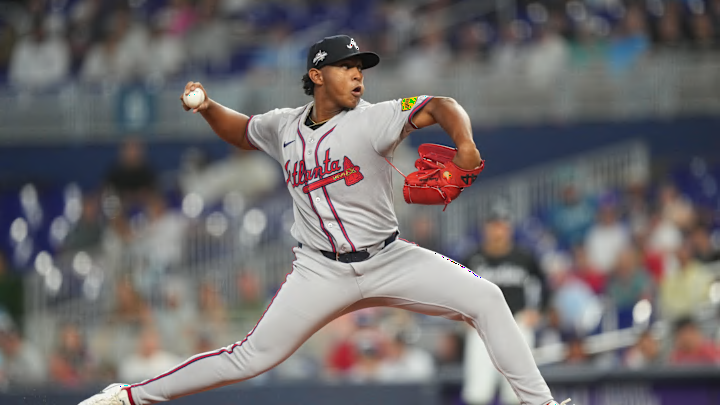
It is increasingly apparent that the Atlanta Braves may need to rely on young pitching prospects in 2026. Following injuries to Spencer Schwellenbach and Hurston Waldrep, the back end of Atlanta’s rotation has become uncertain. With limited external reinforcements currently available, closely evaluating upper-level minor league arms within the organization represents a prudent course of action this spring.
One such arm to monitor is 20-year-old Didier Fuentes, the No. 7 prospect in the Atlanta Braves system, according to MLB Pipeline. Fuentes made his Major League debut last season, though the results were underwhelming. His 13.85 ERA and 9.14 FIP across three starts prompted some within the fan base to question his long-term outlook.
However, after being optioned to Triple-A Gwinnett, Fuentes regained his rhythm and closed the year on a strong note. If Atlanta ultimately needs to lean on a young starter in 2026, the organization will be counting on Fuentes to demonstrate that his early struggles were merely part of the learning curve — and that he is capable of a meaningful bounce-back at the Major League level.
Didier Fuentes, Nasty 80mph Curveball. 😨
— Rob Friedman (@PitchingNinja) June 20, 2025
1st MLB K pic.twitter.com/TpxcZgQ0GJ
Pressure on Didier Fuentes has increased, but he is trending towards being ready should the Braves call
The Colombia native checked in at No. 90 on FanGraphs’ recently released Top 100 Prospects list, underscoring that national evaluators have not wavered in their assessment of Fuentes despite a difficult Major League debut. Fuentes opened the 2025 season with High-A Rome, making his eventual arrival in the big leagues all the more notable. The rapid ascent speaks to both his considerable talent and the confidence the organization has placed in his long-term development.
Injuries compelled the Braves to accelerate Fuentes’ timeline last season, and early spring setbacks have once again thinned Atlanta’s pitching depth. As a result, Fuentes could find himself in line for another midseason call-up. This time, the organization will hope he arrives more refined and prepared to deliver meaningful value to the rotation.
Monitoring the progress of Fuentes, JR Ritchie, and Garrett Baumann this spring should provide valuable insight, as their performances could ultimately shape the order in which the Atlanta Braves choose to promote them during the season.
Ultimately, the Braves’ margin for error on the mound appears slimmer than in recent seasons, placing added significance on the development of their upper-level arms. If Atlanta is to withstand another wave of injuries and remain competitive, contributions from prospects such as Fuentes may prove essential. How quickly he — and others in the pipeline — can translate potential into production could go a long way toward shaping the club’s outlook in 2026 and beyond.
 Add us as a preferred source on Google