

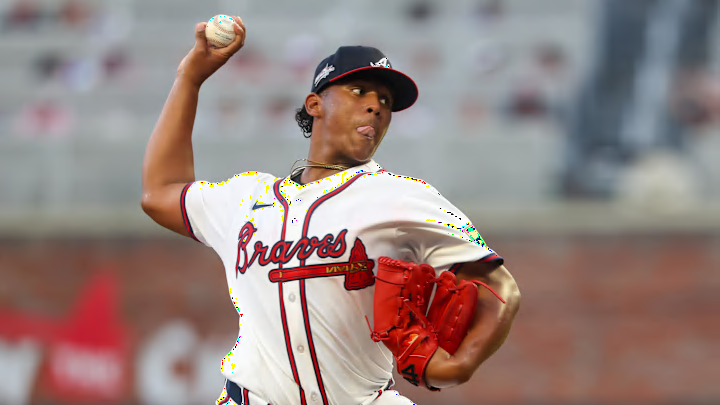
Spring training “impact” can mean two different things: actually forcing a roster decision (rotation/bullpen bench dominoes) or making enough noise that the organization can’t ignore you once the season starts.
For the 2026 Atlanta Braves, these three names fall into pretty clean buckets — two arms with real near-term utility, and one premium defender whose bat is still very much in the “under construction” phase.
Ranking Braves’ top 3 prospects by likelihood of making a 2026 spring training impact
1) Didier Fuentes (RHP)
If you’re looking for the prospect most capable of changing the conversation in camp, it’s Fuentes. The reason is the simple fact that he’s already been there. A pitcher with MLB debut experience (though a bit messy) has a head start in how the Braves evaluate him. The front office knows what his stuff looks like and what it takes for him to survive a lineup that doesn’t give away at-bats.
The 2025 MLB line is ugly: 0–3, 13.85 ERA in four starts. But that’s also the exact kind of stat line that can mislead people in a small sample. The ingredients are what matters most. Mid-90s fastball (touching 97–98), a real slider/sweeper, and strikeout history in the minors.
If his fastball is lively, the slider has bite, and the command doesn’t look like it’s fighting itself, he can slot into the first wave of injury insurance. Either as a spot starter option or the kind of multi-inning relief arm that inevitably becomes valuable over a long season.
2) JR Ritchie (RHP)
Ritchie is the one Braves fans want to pencil into the future, because the profile reads like it was designed in a lab: four-pitch mix, strike-throwing, feel, and “pitchability” evaluators love to rave about. The 2025 track, including the Futures Game nod and the strong ERA work across multiple levels, screams his arrival is coming soon.
Spring training impact is often about role availability, not just talent. Ritchie’s best value is as a starter, and the Braves may be careful with how they ramp up their premium arms. Even if he looks great in camp, the practical play is still likely that he’ll start where he can get regular turns, build innings, and be ready for the first real opening.
But make no mistake — Ritchie can still impact spring by making the organization uncomfortably aware that he might be one of the best options they have the moment a need pops up.
3) Alex Lodise (SS)
Lodise is the classic spring training tease — the guy you love watching because the defense looks crisp and the actions at shortstop just make sense. The glove is the selling point: elite defense and a strong arm.
The problem is, spring training “impact” for an infielder usually requires one of two things: a clear roster lane or a bat that forces the issue. Right now, Lodise is much closer to the first chapter of his offensive development than the part where he’s kicking down a major-league door. The early pro numbers tell the story: high strikeout rate (38.5 percent), low walk rate (4.6 percent), and a bat still adjusting to better velocity.
That doesn’t mean the Braves don’t value him — the non-roster invite is proof they do. It just means his camp is more about exposure, learning, and setting a baseline than it is about stealing a job.
If you’re trying to predict who can actually help Atlanta sooner rather than later, the answer is pretty clear: the pitchers. Fuentes has the most direct path because he’s already tasted the majors and can realistically fill multiple roles. Ritchie has the higher-ceiling starter profile and could turn spring into a launchpad for an early 2026 call-up. Lodise is the long game — and for now, his “impact” is more about the future than Opening Day decisions.
 Add us as a preferred source on Google