

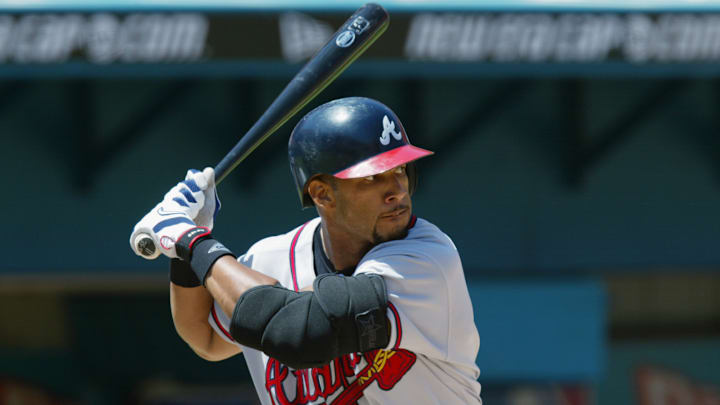
There’s a certain kind of Atlanta Braves nostalgia that lives in the seams between eras. Before the division-title assembly line of the 1990s and long before the World Series parade of 2021, Atlanta baseball carried itself on the back of a do-everything center fielder with a square jaw and a square deal with the fans: show up, play hard, carry the load. Dale Murphy was the face of that promise. A decade later, for a brief but unforgettable window, Gary Sheffield showed up with a bat that crackled like downed power lines, giving the Braves’ lineup a different kind of fear factor.
Different styles, different moments, same outcome: both left Atlanta better than they found it — and both have spent the last decade-plus watching Cooperstown’s door crack open for others while theirs stayed stubbornly heavy.
That’s why the Contemporary Baseball Era ballot is more than a second chance; it’s a chance to rethink value. This committee was created to evaluate contributors whose “greatest impact” arrived from 1980 forward, exactly where Murphy’s peak and Sheffield’s thunder live. The exercise asks voters to weigh dominance vs. longevity, narrative vs. nuance, and character vs. controversy.
Dale Murphy and Gary Sheffield get new life on Contemporary Era ballot
From 1982–87, Murphy stacked a six-year run that still reads like myth: back-to-back MVPs (’82–’83), five straight Gold Gloves patrolling center, seven All-Star nods overall, and a four-time Silver Slugger who was the nightly game plan for the other dugout. He finished with 398 home runs — just shy of the easy round number that tends to grease Hall conversations.
He did it while carrying some lineups that needed him to be both spark and engine. If career WAR (46.5) looks light in a historical spreadsheet, his peak is anything but. When your best six to eight seasons mirror the Cooperstown standard, the question becomes whether dominance in context should matter more than counting stat accumulation. With Murphy, the answer often reveals your Hall philosophy.
Peak-era voters saw five Gold Gloves. Modern ledgers retroactively shave some value off his glove with a negative defensive WAR during portions of that same span. Both can be true: he won those awards by reputation and plays made, and our modern measurements, applied backward, paint a harsher picture.
For the committee, this is where memory matters. Murphy was not a trinket collector; he was a tone-setter who shouldered a franchise and dragged it into relevance. Add an immaculate reputation, integrity, leadership, the “face of the game” stuff voters claim to value, and you get a profile that’s closer to “borderline with a persuasive peak” than “no.” If the Hall is a museum of baseball’s best stories as well as its best spreadsheets, Murphy belongs in that conversation.
Sheffield’s credentials need little polish: 509 home runs, 1,676 RBIs, and a 140 OPS+ that sits in the VIP section of right-handed thunder (tied with Vladimir Guerrero Sr.). He won a batting title in 1992, walked more than he struck out for his career (1,475 BB to 1,171 K), never whiffed 100 times in a season, and wore a ring from the 1997 Marlins.
The Braves got a concentrated dose in 2002–03: a ferocious bat speed, a strike-zone command that bordered on clairvoyant, and the unmistakable feeling that one mistake would wind up in the upper tank. “All-around hitter” gets overused; with Sheffield, it was the job description.
The Mitchell Report connection and the BALCO adjacency are not footnotes; they are the heart of the argument against him. Sheffield has maintained he unknowingly used a topical substance, and intent has stayed murky enough to keep a portion of the electorate parked in “no.” That’s why his candidacy often functions as a referendum on how to treat the steroid era. If you view PED ties as a hard disqualifier, nothing else will move you. If you believe the Hall should account for on-field production in an era when enforcement and culture were wildly inconsistent, Sheffield’s line becomes impossible to ignore.
The Hall of Fame isn’t just a leaderboards club; it’s a memory palace. Murphy is the memory of a franchise carried with grace and grit. Sheffield is the memory of a swing that bent games to its will. The Contemporary Era ballot gives voters permission to honor both truths. If Cooperstown is serious about telling the complete story of modern baseball, there’s room on the walls for both.
 Add us as a preferred source on Google