

It has been a busy week on the offseason calendar for the Atlanta Braves and every other team in the league. We are starting to see deals with free agents, the Rule 5 Draft protection deadline passed earlier this week, and we also saw the winners of the Silver Slugger Awards announced. If that wasn't busy enough, the Braves now have to tackle one of the most important deadlines of the offseason with the non-tender deadline on Friday, November 20.
How team control works in baseball is unique. Players start their time in the majors (most of the time) as pre-arbitration players who have set salary rates for the first few years. After that, you enter arbitration, where salaries are more negotiable but still tend to fall within a specific range for one-year deals.
That said, the first decision that must be made with pre-arbitration and arbitration-eligible players is whether or not to give them contracts at all. That is where the non-tender deadline comes in, but the nuances of how it works require a little bit of explanation.
How the non-tender deadline works and where the Braves stand before it passes
Some confuse the non-tender deadline and the arbitration filing deadline, but they're very different. The arbitration filing deadline is when a tendered player and a team either have to agree to terms on that player's salary OR each side has to "file" what they think that player should make the following season. Once those figures are filed, a third-party arbitrator hears each side's case (assuming there isn't a settlement beforehand) and decides between the two figures.
Before all of that, teams have to decide whether or not to offer (or "tender") a contract at all to these eligible players on the 40-man roster, as they are not under guaranteed contracts for 2027 until that happens. While the filing deadline gets down to exact dollar figures, the non-tender deadline is a simple yes-or-no question. If a player is non-tendered, they immediately become free agents.
The Braves don't have many non-tender decisions this year as a result of how many guaranteed contracts they have on their roster. However, that doesn't mean we couldn't see some weirdness with Atlanta. Of the few non-tender candidates they have (Joey Wentz, Michael Grove, etc.), we could see the Braves non-tender them, but then sign them back on non-guaranteed minor league deals afterwards. The two biggest names they have that are eligible are Dylan Lee and Bryce Elder, and it would be crazy if they non-tendered them.
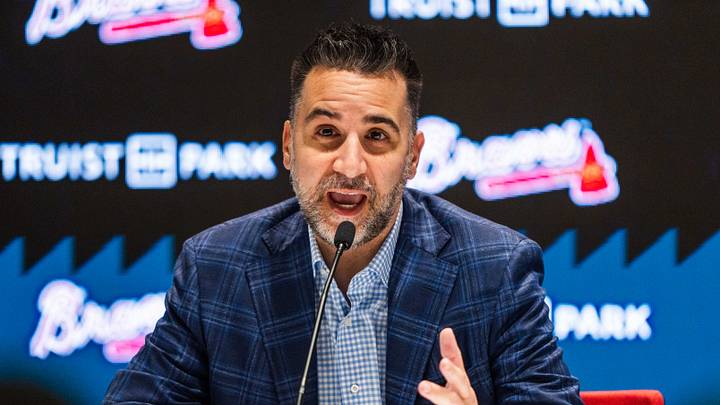
For the Braves, the non-tender deadline is little more than standard roster housekeeping this year. However, what could be fun is to see what players that other teams non-tender that Atlanta tries to scoop up. After all, Alex Anthopoulos isn't one to let a bargain pass him by if he can help it.
 Add us as a preferred source on Google