

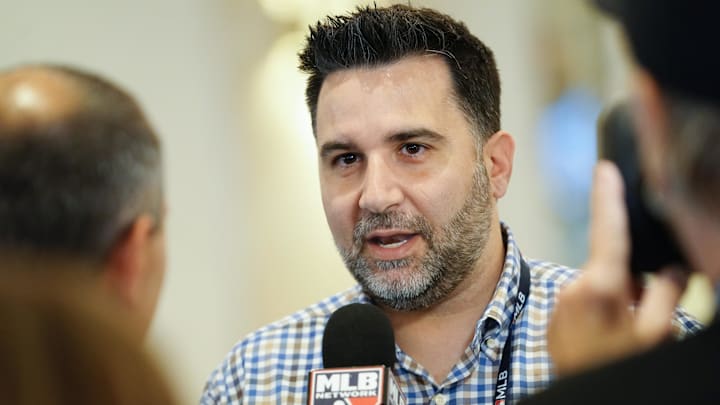
During the early phase of this offseason, the Atlanta Braves were among the most proactive teams in Major League Baseball. General manager Alex Anthopoulos garnered significant approval from fans by re-signing Raisel Iglesias and Ha-Seong Kim, while also bolstering the roster with the acquisitions of Robert Suárez and Mike Yastrzemski.
However, despite Anthopoulos’ strong start, his reluctance to sign a starting pitcher drew criticism from both the fanbase and the media. This scrutiny intensified when key pitchers Spencer Schwellenbach and Hurston Waldrep suffered injuries at the start of spring training. In a recent article, MLB insider Ken Rosenthal highlighted what he viewed as Anthopoulos’ offseason shortcomings, though his critique overlooks the broader context of the free-agent market.
More Sale: "We have a great manager, great front office, core group of players that are gonna be here for a while, good young talent coming up. Excited for that. I wanna be here for that. And it gets you guys off my back asking me if I’m gonna retire at the end of this year.”
— Chad Bishop (@MrChadBishop) February 24, 2026
Ken Rosenthal critiques Anthopoulos' pursuit of a starter, but fails to appropriately acknowledge the impact of injuries
MLB insider Ken Rosenthal recently published an article on The Athletic analyzing Anthopoulos’ hesitation to sign an additional starting pitcher. In the piece, he notes that acquisitions like Zack Littell and Lucas Giolito could provide valuable depth for Atlanta, while also acknowledging Anthopoulos’ intent to retain Bryce Elder and Joey Wentz as internal options.
Additionally, Rosenthal notes that Anthopoulos explored trade avenues involving eventual departures Sonny Gray and Freddy Peralta. While he questions Anthopoulos’ hesitancy, he also acknowledges that the Braves’ “bottom-four farm system” limited the team’s capacity to execute either deal.
The most puzzling section of Rosenthal’s article is his brief dismissal of the role injuries played in Anthopoulos’ offseason strategy. Until spring training, the Braves faced a high threshold to acquire a starter capable of pushing either Reynaldo Lopez or Grant Holmes into the bullpen. Prior to Spencer Schwellenbach’s injury, Anthopoulos had every reason to believe that only an impact-level arm would justify such a move.
Rosenthal questions why the Braves were not more aggressive in pursuing a playoff-caliber starter, but quickly qualifies his observation, noting that the question only became relevant after the spring training injuries occurred.
In the end, while criticism of Anthopoulos’ offseason strategy has been vocal, much of it overlooks the broader context. Limited farm system resources, high standards for impact pitching, and unforeseen injuries all shaped the Braves’ approach. Evaluating the offseason without considering these factors presents an incomplete picture of the challenges faced by the front office.
 Add us as a preferred source on Google