

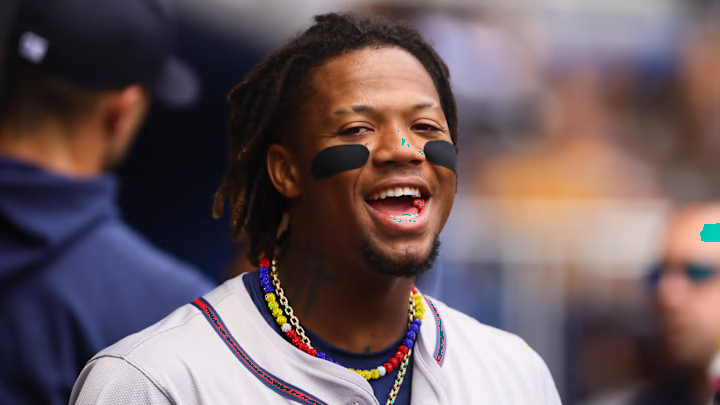
Over the last few seasons, Philadelphia Phillies lefty Cristopher Sanchez has been one of the best pitchers in baseball. Unfortunately for Atlanta Braves fans, a contract he signed in 2024 meant they were stuck watching him dicing up the NL East under a very team-friendly deal for years to come.
On Sunday, the Braves rival decided to make it even worse for the NL East by ripping up that team friendly deal that would've only paid their ace $47 million over the next four seasons, and rewarding him with a new a six-year, $107 million deal.
As the Braves are set to reach the last portions of their team-friendly deal with Ronald Acuña Jr. next offseason, they should follow their rival's blueprint to extend their superstar now.
Braves should use Phillies' deal with Cristopher Sanchez as a blueprint to extend Ronald Acuña Jr.
In 2019, the Braves signed Ronald Acuña Jr. to an eight-year, 100 million deal with two team options for 2027 and 2028 valued at $17 million each. This season represents the final guaranteed year of the extension, though the team options are all but guaranteed to be picked up. However, even though that means Acuña is still three seasons away from free agency, there have been plenty of calls from the fanbase and Acuña himself to extend the superstar.
The Phillies were in a very similar situation with Cristopher Sanchez, their All-Star ace who's finished top-10 in Cy Young voting in 2024 and 2025. With the lefty still under contract and having club options through 2030, there didn't seem to be a rush for the Phillies.
Philadelphia, however, knew that they could use their team options as leverage to gain extra years of control. They could guarantee Sanchez a higher salary in each of the next four seasons in exchange for an extra two years. While the year-to-year breakdown isn't available yet, Sanchez will make roughly $60 million more under his new deal than he was set to make under his old deal.
The Braves would certainly have to pay Acuña much more than an extra $60 million, but with two extremely friendly club options remaining, the Braves could instead up his salary across the next two seasons in a long-term extension in exchange for a lower overall average annual value over the course of the next six to eight years.
If Acuña gets to his final cub option without a new contract with the Braves, Atlanta has virtually no shot in retaining him. If they follow the Phillies' blueprint, they still might have a shot.
 Add us as a preferred source on Google