

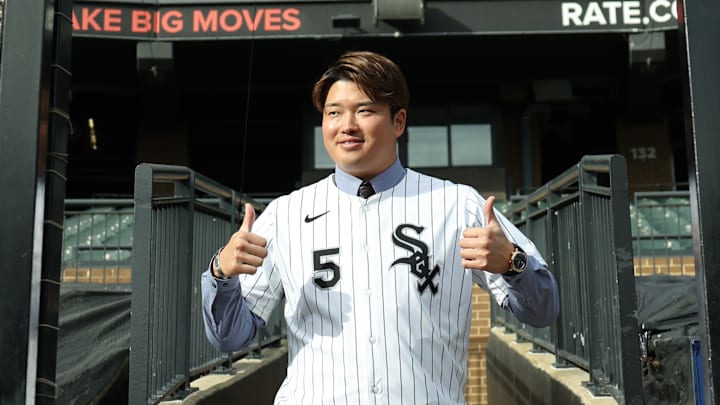
The last few years has seen an unprecedented number of Japanese players coming over to MLB and contributing in a big way. Yoshinobu Yamamoto, Shota Imanaga, Seiya Suzuki, Roki Sasaki, and Munetaka Murakami are just a few of the uber-talents from Japan to make the switch official to much fanfare with Tatsuya Imai and Kazuma Okamoto joining them soon. Curiously, the Atlanta Braves have not been seriously connected to any of those player, but the "why" isn't so simple.
On the surface, the Braves already have some hurdles when it comes to attracting top talent from Japan. Players from Japan have typically gravitated to west coast teams which makes sense from a personal and marketing perspective. Failing that, Japanese players have also landed with the traditional "big" market teams like the Cubs, Yankees, and Red Sox. Unfortunately, the Braves are not in either group, though their market size is much bigger than people realize.
However, another issue that is likely causing problems goes way back to 2009 when, for the first time, the Braves successfully signed a Japanese player in pitcher Kenshin Kawakami.
Braves' experience with Kenshin Kawakami may be causing multiple problems in free agency even now
Younger Braves fans may not know much about Kawakami, but this is the gist. Kawakami was coming off a very successful early career in Japan and Atlanta signed him to a three-year deal as a result. However, he was only okay in his first season and struggled enough in his second year that the Braves basically demoted him all the way to Double-A to stash him out of the way. Kawakami would return to Japan before retiring a few years later and the Braves have not signed a free agent from Japan since.
There are a couple of schools of thought beyond the inherent disadvantages the Braves face when it comes to Japan. There are some higher ups in the organization that remember the Kawakami signing and could be reluctant to press hard in that market which is basically the only way a team is going to get a premier talent from Japan. On top of that, some have speculated that Japanese players did not like how the Braves basically threw Kawakami in a drawer to forget about him which could be creating some additional reluctance from free agents.
Whatever the reason may be, the Braves are clearly at a disadvantage in what is an increasingly important and growing part of baseball right now. Even with top flight talent like Imai still available, the Braves are nonfactors and have dwindling free agent options that could entice them to spend. That may work in the short-term, but Atlanta may want to at least try to pursue Japanese free agents if they want to build a sustainable contender going forward.
 Add us as a preferred source on Google