

Every decision has consequences. For the Atlanta Braves, they ultimately had to land on an offseason strategy and live with it in 2026. They certainly didn't stand pat. They traded for Mauricio Dubon, re-signed Raisel Iglesias, and signed the best reliever on the market in Robert Suarez. Those are real moves that made Atlanta a better team in 2026.
However, there were some decisions that one can take issue with. Some were seemingly small at the time, but proved extremely consequential, while others had such big opportunity costs associated with them that they exacerbated some of Atlanta's more glaring concerns.
Here are the offseason decisions by the Braves' front office that are costing them right now
Now, this is not a grand review of all of the moves the Braves made last offseason. If you want a hot take about the Braves claiming Ken Waldichuk off of waivers, you may want to look elsewhere. Instead, these are some of the offseason decisions that stick out and played a significant part in some of the flaws that have emerged in Atlanta's roster heading down the stretch.
Failing to add an impact starting pitcher put the Braves in a bad spot
This is an obvious, but important decision to point out. There were several interesting arms that were available to varying degrees and, other than Martin Perez, who defies reason, the Braves basically ignored the rotation completely instead.
To say that decision did not age well is the understatement of the century. Grant Holmes and Bryce Elder have been very inconsistent, and Atlanta almost immediately lost Hurston Waldrep, Spencer Schwellenbach, and Spencer Strider (again) to injuries. Rotation depth has been a real problem all year long, and there really have been several causes. However, not being more proactive during the offseason made those factors that much more impactful in all the wrong ways.
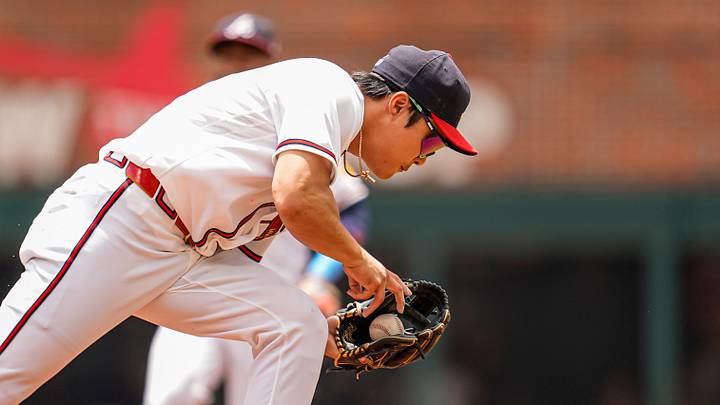
Signing Ha-Seong Kim for $20 million removed too much financial flexibility
Now, this isn't exactly an indictment of the Braves' shortstop strategy. The inconvenient truth about last offseason's market was that there were precious few shortstops available that were worth a damn at all. Once you actually get into the details, you see that emerging with a real shortstop solution was basically an impossible ask.
However, that the Braves took that information and opted to give Ha-Seong Kim $20 million on a one-year deal created a different set of problems. Not only did the Kim signing not solve the Braves' shortstop problem, but it came at the expense of a significant portion of their payroll for the year that could have been used elsewhere either during the offseason or at the trade deadline.
Braves not adding a quality right-handed outfielder created an unnecessary distraction at the trade deadline
So the Braves did at least address the left side of the outfield platoon when they signed Mike Yastrzemski, although how effective that move was is obviously debatable. However, the Braves paid the price in assuming that the now-twice-suspended Jurickson Profar would be able to hold up his end of the bargain.
Yes, Atlanta did finally add some help here at the trade deadline in Lane Thomas, but the lack of righty help cost the Braves some early wins almost certainly, and having to make a midseason move for Thomas made it more difficult from a resource and time allocation perspective to consider adding a better left-handed bat to upgrade over at least Dom Smith.
More thought and attention should have been given to the Braves' bullpen construction
It feels like the Braves' bullpen strategy this year was extremely haphazard. Signing Suarez and re-signing Raisel Iglesias were great decisions, even though Suarez's injury certainly took some of the shine off of them. However, Aaron Bummer fully collapsed, and a number of arms underperformed. This has ultiamtely led to the Braves' remaining high-leverage guys being very heavily used, and Atlanta needing to keep Didier Fuentes in the bullpen, rather than giving him a shot in their rotation, which desperately needed help this year.
 Add us as a preferred source on Google