

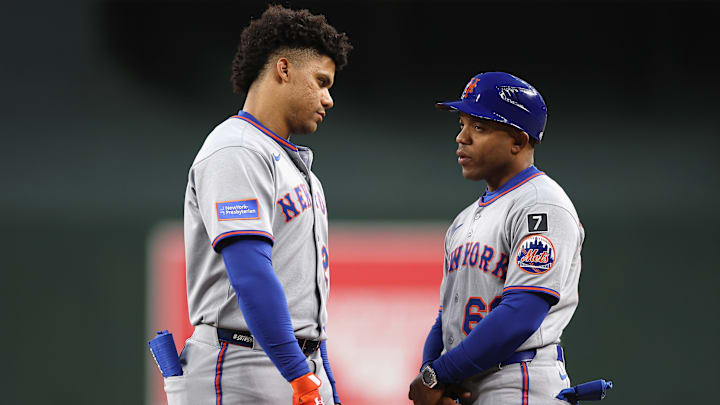
The Atlanta Braves didn’t bring Antoan Richardson into the organization to wave at umpires and clap his hands at first base. They hired a weapon. In New York, Richardson helped engineer one of baseball’s smartest, most efficient running games, turning the Mets into the league leaders in stolen base percentage (89.1% in 2025) and squeezing value out of every extra 90 feet. His reputation isn’t about green-light chaos; it’s about precision — reads, jumps, counts, tendencies, and daring that looks conservative on paper because it almost never burns you. That’s exactly the kind of edge a win-now roster like Atlanta’s should be hunting.
And no, this isn’t about Ronald Acuña Jr. That’s the layup answer. A healthy Acuña with Richardson in his ear is terrifying, but his 73-steal breakout already writes its own headline. The more interesting, and more impactful, question for 2026 is which other Braves can close the gap between their tools and their results. Atlanta finished 2025 in the bottom five in team stolen bases, far too passive for a lineup this athletic. If Richardson can help turn Juan Soto into a 38-steal guy, the Braves have every reason to believe there are big gains hiding in unlikely places, too.
3 Braves hitters who could explode on the bases under Antoan Richardson
Ozzie Albies
Ozzie Albies feels like the most obvious early winner. He’s long had the burst, instincts, and competitiveness to be more than “solid” on the bases, but the results haven’t always reflected how disruptive he could be. He’s quietly logged double-digit steals in every full season he’s played, yet he’s not a pure burner — his sprint speed has hovered slightly below league average — making him a perfect test case for what “doing the analytics properly” can unlock.
Under Richardson, that means refining leads by count and pitcher tempo, picking better steal spots, and sharpening reads on balls in the dirt and outfield angles. Albies doesn’t need a green light so much as a smarter one, and with a more data-backed, game-planned approach, he can nudge his success rate higher, swipe more impact bags, and tilt innings before the middle of the order even steps in. That’s star behavior, not just complementary value.
Michael Harris II
Michael Harris II is built to break something open here. The tools already flash in that Randy Arozarena-adjacent way — dangerous when locked in, aggressive enough to scare you, occasionally a little too vibes-based in his attempts. With a 28.5 ft/sec sprint speed sitting in the upper tier of the league, he doesn’t need to run more just to chase a round number; he needs to run smarter.
Richardson’s system can turn Harris from a “might go” guy into a “you have to think about him every pitch” problem: better jumps, better familiarity with opposing batteries, more selective green lights that raise both his volume and efficiency. If anyone on this roster is positioned to make a 20-20 (or better) season feel routine under sharper baserunning guidance, it’s Harris.
Austin Riley
Then there’s Austin Riley, the prototype for how Richardson’s philosophy scales beyond traditional burners. With Riley’s above-average sprint speed (around the 73rd percentile) and everyday reps, there’s untapped value in the gray areas: first-to-third reads, scoring from first on the right doubles, turning hard-hit singles into stress plays for defenders.
Realistically, no one’s asking him to morph into a 20-steal threat — but nudging him into double digit steal range with a higher success rate and smarter reads is absolutely on the table under Richardson. His track record with players who aren’t classic steal threats underscores the point. This is more about intelligence and calculated aggression, not cosplay as Ronald Acuña Jr. Expect emphasis on situational awareness, video-driven prep, and more aggressive but controlled secondary leads. Riley doesn’t have to steal bags to become a net baserunning asset; he just has to stop leaving free 90-foot upgrades on the table.
Zoom out, and that’s the bet the Braves are making: that baserunning can once again be a real separator, not a throwaway line in spring training. With Antoan Richardson in the building, Atlanta isn’t chasing some small-ball identity shift; they’re weaponizing efficiency around a lineup already built to bludgeon.
 Add us as a preferred source on Google