

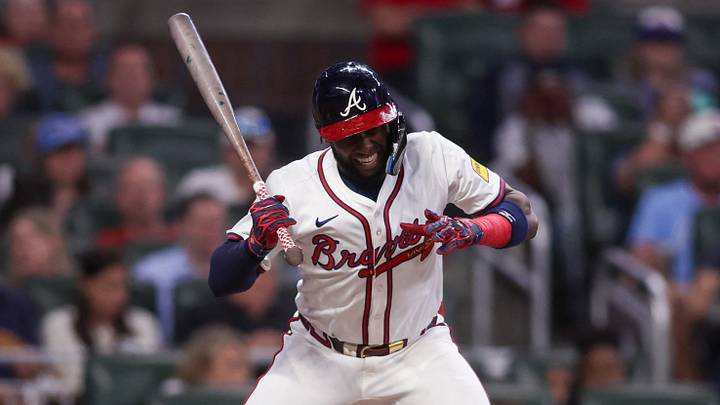
The Atlanta Braves' loss to the Dodgers in the NLDS will sting for a while. Even with Shohei Ohtani barely having any impact, and with LA's offense not being particularly fearsome, the Braves could still barely present a challenge due to Atlanta’s truly dreadful offensive performance. Atlanta has serious questions to answer as to who to keep and who to move on from this offseason, but they also need to take a look in the mirror regarding their own choices.
Sometimes, factors outside of a team's control can make a move look far worse. Sometimes guys have fluke injuries and/or personal problems that can't be predicted. However, the Braves made a few decisions last offseason that loomed very large during Atlanta's playoff elimination.
ANDY PAGES DELIVERS
— MLB (@MLB) October 8, 2026
Dodgers go ahead in the 7th! pic.twitter.com/1LXhfFBLGx
Here are the decisions the Braves made last offseason that doomed them against the Dodgers in the 2026 NLDS
No one denies that the Dodgers were going to be tough to beat under almost any circumstances, and the Braves had to weather a brutal gauntlet of pitching in the playoffs. It’s honestly remarkable that the Braves won as many games as they did given the state of this offense. However, the Braves could have made things a lot easier on themselves had different paths been chosen last offseason.
Signing Ha-Seong Kim
Look, most outside observers were pushing for the Braves to bring Ha-Seong Kim back last offseason. The Braves' experiment with Orlando Arcia at shortstop failed spectacularly, and there were few decent options available on the offseason market that were worthy of a roster spot on a contender. Unfortunately, Kim suffered a severe finger injury during the offseason shortly after signing, and it cost Kim a large portion of the season. When he did play, his performance left a lot to be desired.
Kim getting hurt was a fluke, but he was never a long-term fix, nor was he ever much of an offensive threat. However, by signing him, the Braves not only used $20 million of payroll that would have been better used elsewhere, but it also prevented the team from entertaining other external solutions at shortstop. What's done is done, but the Braves ended up paying a real opportunity cost throughout 2026.
Trusting that Jurickson Profar would be able to handle left field
Even the most pessimistic out there didn't think that Jurickson Profar would test positive for PEDs in 2025 and get suspended for half the season. The Braves really thought Profar would be a steady offensive presence out in left field when they signed him, and his suspension caught the entire organization off guard.
What is indefensible, however, is failing to have a real backup plan in left field for 2026 given his suspension, and no, Mike Yastrzemski does not count. Despite his previous suspension, the Braves penciled him in and assumed that Profar had made a one-time transgression. We know the rest of the story. Profar did indeed test positive for PEDs again, got suspended for the entire season, and the Braves were left to pick up the pieces. Fool me once, shame on you. Fool me twice, shame on me.
Failing to acquire quality starting pitching depth
This is a big one, but it didn't show up in the box score in the ways you would normally expect. Since the start of spring training, the Braves had been rightly criticized for not adding at least one more decent starting pitcher. As injuries then took down Spencer Schwellenbach, Spencer Strider, Hurston Waldrep, Bryce Elder, and Reynaldo Lopez over the course of the season, that mistake looked like it was becoming a fatal flaw.
However, the Braves actually found a way to make it work, at least in the regular season. Thanks in no small part to some quality work from pitching coach Jeremy Hefner, as well as a surprisingly effective Martin Perez, Atlanta’s pitching staff wasn’t really a problem in the box scores. That said, the lack of reliable starting pitching finally took a real toll in the postseason. The Braves had a couple of fun playoff results from Ray Kerr-led bullpen games, but they also had multiple games where key relievers were either fatigued and/or unavailable because of the heavy usage. The Braves should have been punished more than they were in the regular season, but they still paid the price for assuming their questionably healthy rotation wouldn't need reinforcements.
 Add us as a preferred source on Google