



MLB Settles Lawsuit on Broadcast Restrictions
Major League Baseball looked at itself in the mirror and figured out that they really didn’t want to go on record as losing this game.
A case was settled today that has been slogging through the court system since 2012. It’s been a personal pet peeve of mine, and the result is… probably about as good as we could have hoped for.
The Problem
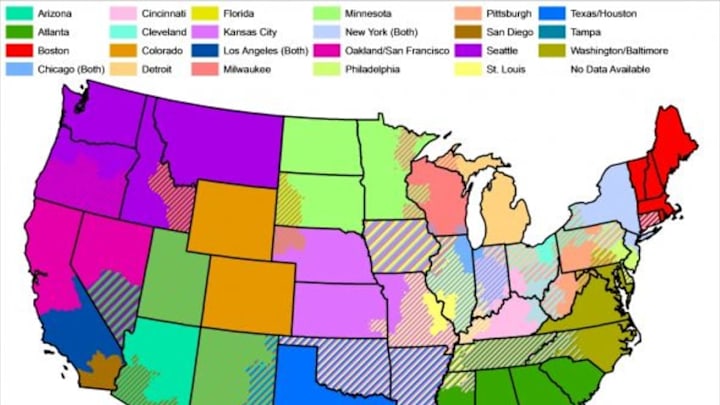
Let’s supposed that you are a Braves’ fan located in Omaha, Nebraska. Your ability to watch Braves’ games is severely limited. You get to see a lot of Royals’ games, but if you want the Braves, you must purchase the Extra Innings package… and be connected to a cable provider. Alas, even that isn’t enough, for during the rare times in which Atlanta is in Kansas City, you still have to subscribe to whatever service holds the broadcast rights to the Royals.
You are not allowed to buy the relevant FOX Sports package… or at least, you’re not allowed to watch the Braves on that package. Your only option is to buy an out-of-market package, and pay a premium price to do so (see: pages 13-14 of this court filing).
The Lawsuit

A few fans and probably a few more lawyers got together and decided to sue Major League Baseball, arguing that the sport had unilaterally decided to impose these restrictions on fan choice, effectively eliminating competition through an act of collusion.
There’s a legal term for this: it’s called a “trust” – the establishment of an illegal monopoly in each of these territorial areas.
For the past 100 years or so of baseball’s existence, such arrangements were ruled to be legal… partly because baseball was unique and needed such protections to assist itself in how it conducted business.
However, in 2013, that shield of protection was removed – at least US District Judge Shira Scheindlin ruled that this shield did not extend to broadcast rights.
That was dagger #1 against the MLB’s efforts to defend itself.
Dagger #2 came in May of 2015 when Judge Scheindlin granted class action status to the case – meaning that every baseball fan could potentially have the right to complain about their ability to obtain MLB games, the pricing, and especially the restrictions.
Examples in that May decision clearly outlined the problem facing consumers: limited choices, and poor ones even when those choices actually existed.
The Solution
This week, the two sides were to begin to actually argue the case. With two strikes already against Major League Baseball, a settlement was reached. Had the case been argued with MLB losing, chaos would have ensued: every TV contract would have been in legal limbo, for the territorial rights are expressed in the fees charged by each team. Suddenly, the Yankees contract might become more lucrative, while many small market teams might not be. The balance would have been completely upset.
According to the Washington Post, this is the deal:
- Single-team packages will be available at a price of $84.99. This represents a price drop of 23% from last year.
- Extra Innings (I believe that’s what is meant by the phrase “the full television package”) will be reduced to $110.
- If you are a fan of a faraway club, but subscribe to your local Regional Sports Network [RSN] (YES, NESN, one of several FOX Sports affiliates, SUN, Comcast Mid-Atlantic, etc.), then you can watch your team when they come into town for $10 extra.
With all of this, it sounds like baseball fans will have options – at lower prices – to see every game they actually want to see. It would indeed be better if you could, say, sign up for FOX Sports South even if you’re located in Oregon. Instead, you’d have to (a) sign up for the single-team package, which amounts to about $17 a month during the season, and then (b) add the local RSN for probably another $6-10 per month, and finally (c) add the $10 you need to cover a road series in your local area.
The ‘balance’ spoken of above will still be changed, though there will still be some incentive for consumers to subscribe to their local RSN… which might or might not have a big impact on viewership (I suspect very little overall).
But at the minimum, when you buy a package that claims ‘every inning of every game’ is available… it might actually be possible.
Finally.